
Advanced Tax Planning in Franklin Lakes, New Jersey
Most people meet with someone about their taxes once a year, in the spring, to talk about a year that is already over. That is tax preparation. It is not tax planning.
By the time a return is filed, nearly every decision that could have changed the number has already been made. The conversion window closed. The gain was realized in the wrong year. The charitable gift went as cash instead of appreciated stock. The distribution came out of the wrong account.
Tax planning happens before that, across years, not months, and with your full financial picture in view rather than a single return.
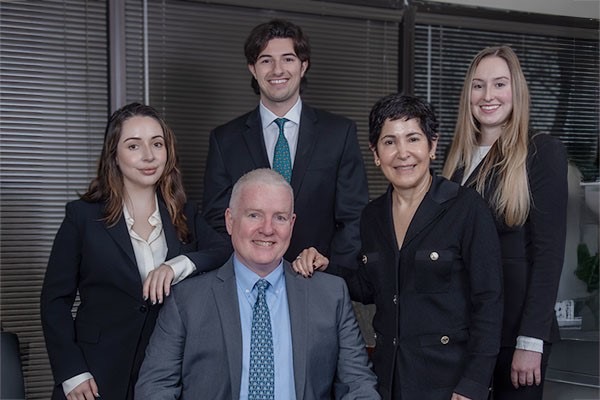
That is the work this office was built around. Our Managing Partner, Debbie Taylor, CPA/PFS™, JD, CDFA®, is Chief Tax Strategist for Carson Wealth — the firm-wide role, not a local one. She leads Carson Tax Solutions, the national tax planning program that supports advisors across the Carson network, and she has spent nearly three decades on this one problem. Her work is quoted in Barron’s, The Wall Street Journal, and ThinkAdvisor, and she lectures on tax strategy on behalf of the AICPA.
For clients of this office, that means the tax thinking behind your plan is not outsourced or bolted on. It is where we start.
Tax planning, not tax prep
Here is the practical difference.
Tax preparation asks: what do I owe for last year?
Tax planning asks: across the next ten to thirty years, what is the lowest total tax my family is likely to pay, and what do we need to do this year to get there?
Those are different questions with different answers. The second one is where the money is, and it is the one almost nobody is being asked.
How we approach it
1. We capture the return
Your Form 1040 and its schedules are the single most revealing document in your financial life, and most portfolios are managed by people who have never seen one. We look at where income is actually coming from, what is being taxed at what rate, what deductions are being left on the table, and what the return tells us about next year.
2. We build the multi-year picture
We model income, distributions, Social Security, capital gains, and required minimum distributions forward across your projected retirement. This allows us to see the low-income years and the high-income years before you arrive in them. Nearly every meaningful tax strategy depends on knowing which kind of year you are in.
3. We work the windows
Certain years are opportunities: the gap between retiring and claiming Social Security, a year with a large capital loss, a low-income year before RMDs begin. Those windows are where Roth conversions, gain harvesting, and bracket management do their work… and these windows are not open forever.
4. We coordinate with your CPA and attorney
We do not work around your other professionals. We work with them, directly, so the estate documents, the tax return, and the portfolio are telling the same story.
What we actually plan for
Roth conversion strategy. This is not a one-time decision. It’s a multi-year sequence sized to your bracket, your projected RMDs, and what you intend to leave to heirs. Under the SECURE Act’s ten-year rule, most non-spouse beneficiaries must empty an inherited IRA within a decade, often during their own peak earning years. That changes the math on conversions substantially, and it is the reason converting can make sense even for families already in a high bracket.
Required minimum distributions. RMDs can begin at age 73, but the planning does not start then. Planning starts in your early sixties, when there is still time to reduce the large IRA balance that will be subject to RMDs.
Qualified charitable distributions. For clients 70½ or older, a QCD can satisfy an RMD while keeping the income off your return entirely, which can matter for Medicare IRMAA surcharges and the taxation of Social Security. Pairing a QCD with a Roth conversion in the same year is one of the more efficient combinations available.
Bracket and MAGI management. Some years we are trying to fill a bracket. Other years we are trying to stay under a threshold. Knowing which is which — and why — is the whole game.
Withdrawal sequencing. Which account you draw from, in which year, in what order. Households with taxable, tax-deferred, and tax-free assets have real flexibility here. Households with everything in a 401(k) have very little, which is itself a planning problem worth solving early.
Concentrated positions and capital gains. Executives, business owners, and long-term holders often have one position carrying enormous embedded gain. Diversifying it is a tax problem before it is an investment problem.
Charitable strategy. Appreciated securities, bunching into a donor-advised fund to clear the standard deduction, and the new below-the-line charitable deduction and 0.5% AGI floor introduced by the One Big Beautiful Bill Act.
The widow’s penalty. When one spouse dies, the survivor typically moves from married-filing-jointly to single — often with similar income and roughly half the bracket width, plus a lower IRMAA threshold. It is one of the most predictable tax events in a married couple’s life and one of the least planned for. We plan for it while both spouses are living. Read more on our Women & Wealth page.
Who this is for
We do our best work with:
- Households with significant assets in tax-deferred accounts facing large future RMDs
- Pre-retirees in the five to ten years before retirement, when the planning windows are widest
- Business owners and executives with concentrated stock, equity compensation, or a liquidity event ahead
- Charitably inclined families who want their giving to be tax-efficient
- Anyone who has been told their taxes are “just what they are”
Frequently Asked Questions
What is the difference between a CPA and a tax-focused financial advisor?
Your CPA reports what happened. We help decide what happens. Most CPAs are compliance professionals working under filing deadlines, and the good ones will tell you they do not have the bandwidth for forwardlooking strategy across an entire portfolio. We work alongside your CPA, not instead of them, and we are glad to sit on a call with them.
Is a Roth conversion right for me?
It depends on your bracket today versus your projected bracket later, your ability to pay the tax from outside the IRA, your Medicare premium thresholds, and what you intend to leave to heirs. There is no universal answer, which is why we model it rather than rely on a rule of thumb.
Do you prepare tax returns?
We do not prepare returns. We do read them, plan around them, and coordinate directly with the CPA who prepares yours.
Do I need to leave my current CPA or attorney?
No. We would rather join your existing team than replace it.
Do you work with clients outside New Jersey?
Yes. Our primary service area is Bergen, Passaic, Morris, and Essex Counties in New Jersey and Rockland and Orange Counties in New York, but we serve clients in more than 20 states.
Let's look at the return
The most useful first conversation we can have is a straightforward one: bring your last tax return, and we will tell you what we see. No cost, no obligation.